
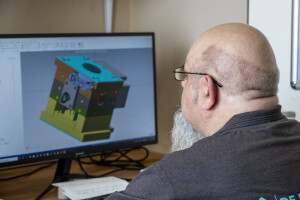
Design for Manufacturing (DFM)
Design for Manufacturing (DFM)
The crucial step between a product design and a manufacturable product design. Perhaps the most important phase of product development.
DFM: where ideas and implementation go head to head
Your product designers have done a brilliant job. A unique design with all the features you wanted. Unfortunately, however, this doesn’t always mean that the concept can simply be produced in plastic. That’s where the engineers at De Beer Plastics come in to lend a helping hand, transforming your idea into a design optimised for injection moulding.
Sometimes these are minor adjustments, such as optimising reinforcement ribs or introducing fillets or draft angles. But sometimes a completely new concept has to be devised, without losing sight of the original idea.
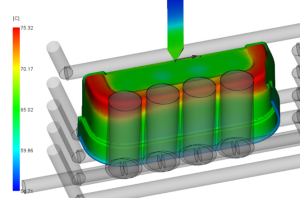
MoldFlow
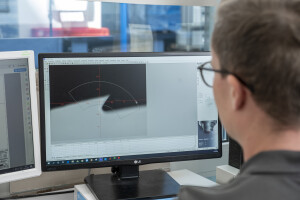
A good first step in determining the manufacturability of a product is to carry out a MoldFlow analysis. This computer software simulates the injection moulding process and identifies potential problems before a mould is built.
A thorough MoldFlow analysis highlights the effects of gate location, process parameters, cooling and material-specific properties such as shrinkage and heat release. This enables us to accurately determine cycle times and clamping force, but above all to optimise the product or mould to ensure a perfect product and process.
Divider lines
Ideally, you wouldn’t want to see any parting lines on high-quality plastic components. However, in plastic injection moulding, you use a mould, and this has to be opened to remove the product. So parting lines are unavoidable.
However, that does not mean there is no scope for choice here. Depending on aesthetic requirements or technical considerations – such as sealing surfaces or sliding surfaces that need to be perfectly smooth – the engineers at De Beer Plastics will help you devise the best solution for your product.
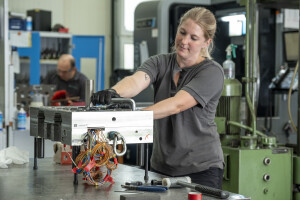
Demoulding
There are various methods for ejecting a product from a mould, ranging from ejector pins to ejector plates, and from slides that open to cores that fold inwards to release undercuts.
With complex products, demoulding can be one of the greatest challenges, determining the complexity and cost of a mould. When it comes to overcoming this complexity, the experience of an injection moulding specialist such as De Beer Plastics – with its in-house mould-making facility and skilled designers – really comes into its own.
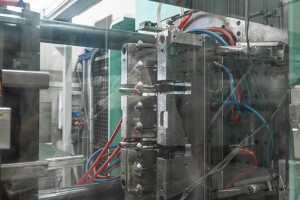
Final material choices
During the DFM phase, material choices made earlier may be reconsidered. If, for example, the MoldFlow analysis indicates that a material does not appear to be suitable for the product after all, this is still the time to opt for a different material.
Sometimes, simply adding certain fillers, such as glass fibres or minerals, is enough to prevent expected warping. However, on other occasions, a different solution really needs to be found, and this can have significant implications for the product or its cost. That is why it is important to have an injection moulding specialist on hand with extensive experience of materials. That way, you will always find a suitable solution.

Moulding challenges into Reality
