
Injection moulding
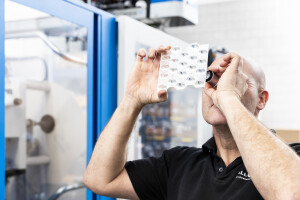
Transparent plastics
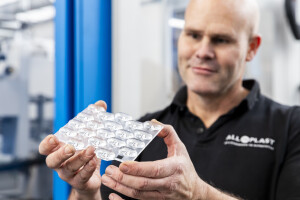
Injection moulding of transparent products requires a thorough understanding of materials, expertise in their processing and precision in mould design.
Special-purpose machinery
When dark-coloured plastics are processed on machinery, residues often remain in the sharp corners of the machine. If transparent materials such as PC or PMMA are then processed at relatively high material temperatures, these residues may break away into very small pieces, causing contamination with particles or streaks in the product.
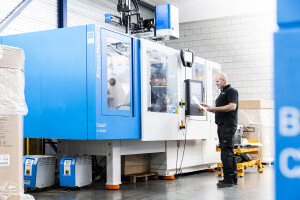
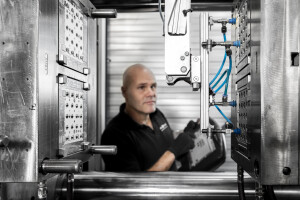
To ensure that no contamination occurs in transparent products, we have a large production facility equipped with machinery that processes only transparent materials. Here, we work in a clean, dust-free environment to achieve a perfect result.
Specialist knowledge
Polycarbonate and PMMA are materials that are difficult to process and require specialist knowledge of processes and parameters. Particularly when dealing with complex shapes – such as those with significant variations in thickness, like lenses – it is the years of experience of our skilled professionals that make all the difference.
Highest precision, no visible flow lines and the ability to remove the product from the mould without scratching it: these are examples of the challenges involved in manufacturing transparent components, where experience can make all the difference.
Special moulds
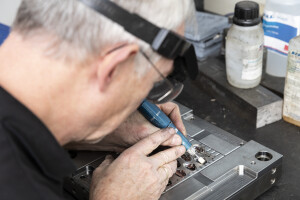
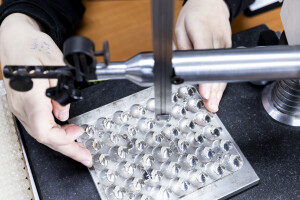
To produce beautifully transparent products, a mould must be polished to a high gloss. This is a traditional craft in which De Beer Plastics boasts decades of combined experience. However, it is not just the surface finish that requires specialist expertise; the entire mould construction, including ejection and cooling, demands a different approach to that used for standard plastics.
The polished surface also makes the moulds vulnerable, as even the slightest scratch will be visible in your product. That is why we place great importance on our in-house mould-making departments. This ensures that full responsibility remains with a single party, and should any unexpected issues arise, we can respond immediately and carry out professional repairs.
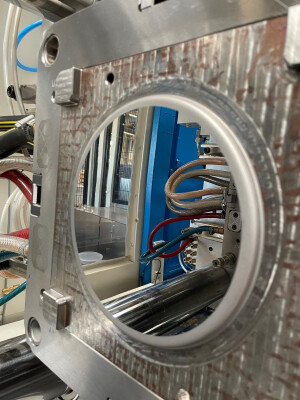
Specific spraying techniques

Are you looking for a reliable and competent partner to manufacture your products?
In-house mould making and R&D for co-creation
Ample capacity across more than 100 machines in three factories
A proven track record in challenging projects

Moulding challenges into Reality
