
Injection moulding
2K Injection Moulding
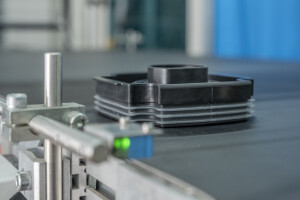
Two materials, one production process. This allows hard/soft combinations to be produced fully automatically in a single machine.
Combinations of materials
Would you like to combine the properties of two materials in a single product? If so, these materials can be bonded together using two-component injection moulding. However, many technical materials do not adhere to other materials.
With our extensive experience in processing soft plastics, we can truly call ourselves specialists in TPE. Hard/soft combinations are the areas where our expertise really comes into its own.
If a combination of two materials is required that simply cannot be joined thermally, De Beer Plastics also knows of alternative ways to develop a perfect two-component product.
2K or 3K
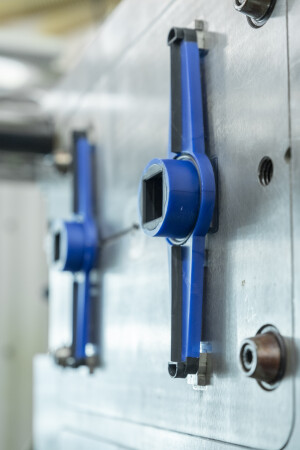
The possibilities of multi-component injection moulding go beyond simply combining two materials. We are also capable of combining three materials. For smaller production runs, we often use a combination of automated two-component injection moulding with an overmoulding step, whereby a component is placed in a separate machine and overmoulded.
However, for larger production runs, it is possible to combine three different materials in a single mould and on a single machine. Ask us about the possibilities of 3K injection moulding.
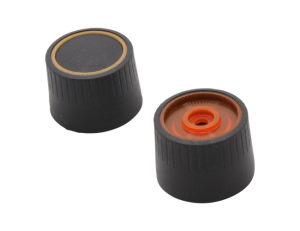
2K injection moulding is used for a variety of reasons:
Assembly
By joining two components together using injection moulding, an assembly step can be eliminated. This removes a production step and saves money.
Sealing
An additional component can form a seal between other parts. By injecting this component directly, there is no need for a separate seal. Furthermore, the joint between the soft and hard components is completely watertight and airtight. This significantly reduces the risk of leakage.
Haptics/ergonomics
Multi-component injection moulding can be used to give a product a non-slip or rubber-like finish. This makes it possible to add value to the products. Personalised product variants can also be created by varying the colours.
Information/colours
By using a second colour during the injection moulding process, text or symbols can be applied. This information can be applied directly to a product without the need for additional work, such as printing.

Are you looking for a reliable and competent partner to manufacture your products?
In-house mould making and R&D for co-creation
Ample capacity across more than 100 machines in three factories
A proven track record in challenging projects

Moulding challenges into Reality
