
TPV injection moulding
TPV injection moulding
TPV (Thermoplastic Polyolefin Vulcanisate) is a compound consisting of a polyolefin-based plastic and a cross-linked elastomer.
TPV: the modern alternative to EPDM
Replacing traditional elastomers such as EPDM with modern alternatives like TPV offers many advantages, both in terms of durability and cost-efficiency. Injection moulding TPV is faster and cleaner than vulcanising EPDM, and is also recyclable.
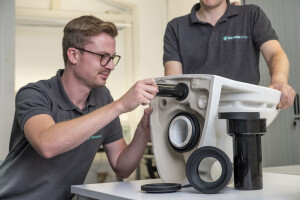
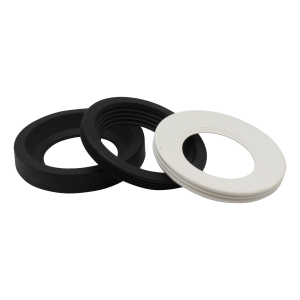
De Beer Plastics has mastered the art of replacing elastomers with TPV and has its own compounds for applications such as drain seals, which comply with EN 681-2.
TPO vs. TPV
Both TPO and TPV are compounds consisting of a combination of a polyolefin and an elastomer. Unlike TPO, the elastomer in TPV is cross-linked, or vulcanised.
By vulcanising elastomers into TPV, TPV comes closest to traditional rubber in terms of mechanical properties. This is particularly evident in its excellent compression properties.
TPO is usually used as an impact-resistant material, with its hardness largely determined by the elastomer content.
High-temperature TPE
TPV offers above-average temperature resistance and can compete with traditional vulcanised elastomers in many applications. Furthermore, its elastic properties remain intact even at higher temperatures.
This makes TPV ideal for static and semi-static seals where low compression set is required and TPS no longer meets the temperature requirements.
Typical characteristics of TPV are:
Operating temperature range: -50°C to +155°C
Hardness: 35 Shore A to 50 Shore D
Resistance to oils: reasonable
Resistance to acids: very good
Resistance to alkalis: very good
Resistance to ageing (ozone): very good
Contact
Would you like to know more about the possibilities of TPV?

CEO
René de Beer
Contact Laurence and find out what De Beer Plastics can do for your organisation.
In-house mould making and R&D for co-creation
Ample capacity across more than 100 machines in three factories
A proven track record in challenging projects

Moulding challenges into Reality
