
Informative article
What is injection moulding? A basic guide to technical products
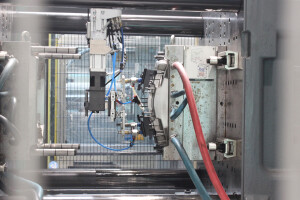
Injection moulding is one of the most widely used manufacturing techniques for plastic components, but what makes the process so well-suited to technical mass production?
The basic principle: how the injection moulding process works
In injection moulding, plastic pellets are melted and injected under high pressure into a closed mould. This mould contains a cavity shaped like the desired product. Once cooled, the mould opens and the part is ejected, ready for use.
The cycle time, depending on the material and wall thickness, is typically between 10 seconds and one minute. What makes the process so attractive for technical applications is the combination of high repeatability, tight tolerances and the ability to produce complex geometries in a single step. Once a mould has been built and validated, the unit cost for larger production runs is exceptionally low.
When should you opt for injection moulding?
Injection moulding is ideally suited for producing parts in medium to very large batches where high standards of dimensional accuracy and surface finish are required. The process is suitable for a vast range of materials, from standard polyolefins such as PP and PE to high-performance engineering plastics, and allows for virtually any desired geometry, provided the design takes into account the technical limitations of the mould.
For small batches or prototypes, alternative methods such as 3D printing or CNC milling are often more cost-effective. However, as production volumes increase, injection moulding is hard to beat in terms of unit cost.
Batch size: injection moulding is cost-effective for runs of several thousand units per year
Complexity: virtually any 3D shape is possible with the right moulding technique
Range of materials: from PP and ABS to PEEK and PPS
Surface quality: ready for injection moulding straight away, often without the need for finishing
The role of material and mould selection
The choice of the right material determines the final properties of the component. Factors such as mechanical stress, the chemical environment, temperature resistance and aesthetic requirements guide the choice of material.
At the same time, the mould design determines manufacturability: the number of cavities, the cooling system, the gate location and the ejection system all have a direct impact on quality, cycle time and unit cost. De Beer Plastics actively contributes ideas right from the design phase to identify potential issues early on and avoid costly modifications later in the process.
Quality and consistency in mass production
One of the greatest advantages of injection moulding is its excellent reproducibility. Provided the process is correctly set up and monitored, variations between parts are minimal, even after millions of cycles. Modern injection moulding machines are equipped with process monitoring systems that record pressure, temperature and filling behaviour in real time. Deviations are detected immediately, ensuring that quality assurance is automated and reliable. For technical applications in the automotive, medical or electronics industries, such process control is often a strict requirement.

Moulding challenges into Reality
