
Blog
What is contract manufacturing in injection moulding?
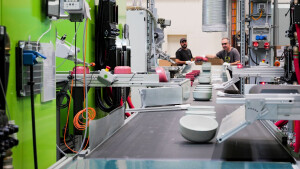
Contract manufacturing in injection moulding means that a specialist manufacturer takes full responsibility for production, from the mould to the finished product delivered.
The essence of contract manufacturing
In contract manufacturing, a company outsources the production of parts or (sub)assemblies entirely to an external party. In the context of injection moulding, this typically encompasses not only the actual injection moulding process, but also mould management, raw material procurement, quality control and packaging. The client retains ownership of the mould and the product, but delegates operational responsibility to the contract manufacturer. This model is attractive to companies that wish to focus on their core activities without managing production facilities themselves.
What does contract manufacturing involve?
The scope of a contract manufacturing agreement varies greatly depending on the situation and the supplier. In a limited model, the client supplies the material and mould, and the manufacturer is solely responsible for the injection moulding process. In a comprehensive model, also known as turnkey or full-service manufacturing, the contract manufacturer takes responsibility for the entire supply chain.
Mould development and management
Raw materials procurement and materials management
Injection moulding and process control
In-line quality control and final inspection
Assembly of sub-components
Bespoke packaging and labelling solutions
Logistics and stock management
Advantages over in-house production
The strategic benefits of contract manufacturing are significant. Companies avoid having to invest in machinery, premises and production expertise, and benefit from the economies of scale and specialist knowledge offered by the contract manufacturer.
Variable production costs replace fixed costs, which increases financial flexibility. Furthermore, outsourcing provides access to technologies and certifications such as IATF 16949 for the automotive sector, which would take years to develop in-house.
Risks and how to mitigate them
Contract manufacturing also carries risks: reliance on a single supplier, limited insight into the production process, and potential issues with quality or delivery reliability. You can manage these risks by establishing a transparent partnership from the outset: clear specifications, agreed quality indicators, audit options and a robust escalation process.
Long-term contracts with agreed volumes give the manufacturer the certainty needed to invest in capacity and quality systems, which strengthens the reliability of the partnership. At De Beer Plastics, we often use an open-book costing approach, ensuring that costs and changes in material prices are shared transparently.

Moulding challenges into Reality
