
Blog
TPV injection moulding: rubber-like properties with thermoplastic processability
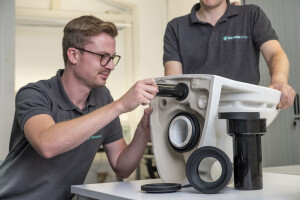
TPV combines the functional properties of vulcanised rubber with the manufacturing advantages of a thermoplastic. This makes the material one of the most promising alternatives to traditional rubber in technical applications.
What makes TPV unique within the TPE family?
Thermoplastic vulcanisate (TPV) is a specific variant within the TPE family in which the rubber component, typically EPDM, undergoes dynamic vulcanisation during compounding with a polypropylene matrix. This dynamic vulcanisation results in a finely dispersed network of cross-linked rubber particles within a thermoplastic matrix. The result is a material that approximates the resilience, set resistance and chemical resistance of vulcanised rubber, yet can nevertheless be processed thermoplastically on standard injection moulding equipment. This makes TPV fundamentally different from other TPE variants such as TPS or TPO.
Technical specifications and where TPV excels
TPV stands out from other thermoplastic elastomers due to its low compression set, a property of great importance in sealing applications. Whereas standard TPS or TPO gradually relaxes and loses its sealing force under prolonged compression, TPV retains its elastic recovery significantly better. In addition, TPV offers good resistance to oils, greases and thermal ageing. The operating temperature is considerably higher than for TPS: continuous exposure up to 120°C and peak temperatures of up to 135°C are achievable for most TPV grades.
Low compression set: retains sealing force under prolonged stress
Good resistance to oil and grease
Higher temperature resistance than TPS and TPO
Excellent resistance to UV light and ozone
Recyclable, unlike EPDM rubber
Applications: seals, membranes and flexible joints
TPV is ideally suited to applications where rubber-like performance needs to be combined with the processability and recyclability of thermoplastics. Seals in the automotive sector, such as door and window seals, engine compartment components and coolant hoses, are traditionally made from EPDM rubber but are increasingly being manufactured from TPV.
TPV is also used in the water industry for flexible coupling sleeves and lip seals for PVC fittings that comply with EN 681-2. In the construction and electronics industries, TPV seals are used in cable management and enclosure seals.
Processing and key considerations regarding moulding
TPV processes well on standard injection moulding equipment, but requires a well-defined process window. The melting temperature is typically between 200 and 240°C; excessively high temperatures lead to thermal degradation of the cross-linked EPDM phase. TPV grades are less sensitive to drying than TPS, but for quality-critical applications, drying at 80°C for two hours is recommended. The low viscosity of soft TPV grades requires precise control of injection pressure and speed to prevent flash formation at the mould gap.
De Beer Plastics specialises in the processing of thermoplastic elastomers and manufactures a wide range of products from various types of TPV. Please get in touch at an early stage to discuss your product, with no obligation.

Moulding challenges into Reality
