
Informative article
TPS Injection Moulding: the most versatile soft plastic
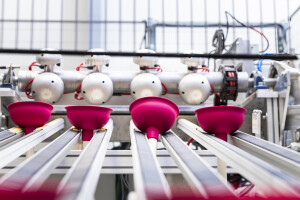
TPS combines the flexibility of rubber with the processability of thermoplastics. This makes the material ideally suited to technical mass production.
The basics: what is TPS and why is it so widely used?
Thermoplastic styrene block copolymer (TPS) is the most commonly used type within the TPE family. The material combines a soft, rubber-like feel with the processability of a standard thermoplastic. It can be processed using conventional injection moulding equipment, without the need for vulcanisation or special post-treatment. This results in significant savings in cycle time and production costs.
Furthermore, TPS is fully recyclable: sprues and runners can be reused immediately. Within the TPS family, the two most commonly used variants are SBS and SEBS, with SEBS being the better choice when UV resistance or higher operating temperatures are a factor.
From soft grips to seals: the range of applications
Where TPS really excels is in the breadth of its applications. The hardness is highly adjustable: from extremely soft (almost comparable to a gel) to relatively stiff, making the material suitable for a wide variety of applications. Examples include soft grip zones on tools or medical handles, flexible seals, protective caps for connectors, or vibration dampers in technical assemblies.
TPS is also ideal for 2K injection moulding: it adheres well to PP or ABS substrates, allowing hard and soft materials to be combined in a single process step. This eliminates the need for an assembly step and improves the manufacturing precision of the end product.
Examples of common applications:
Soft grip components on hand tools, medical instruments and consumer products
Seals and gaskets in housings and connectors
Cable sheaths and protective covers in the electronics and automotive industries
Earplugs, masks and tubing for medical applications (SEBS grades)
Vibration dampers and buffers in mechanical and industrial assemblies
2K components in which a soft outer layer is sprayed over a hard core
TPS as a substitute for rubber: when is it worth making the switch?
One of the most practical advantages of TPS is that, in many cases, it can replace vulcanised rubber without requiring any fundamental changes to the production line. Rubber requires a separate vulcanisation process, is not recyclable and has longer cycle times. TPS can be processed on the same machines as your other thermoplastic components, which offers logistical and production planning benefits.
Colour accuracy is better than with rubber, and it is easier to keep material documentation up to date for quality systems and customer requirements. For applications involving continuous exposure to high temperatures or aggressive media, rubber is sometimes still the better choice, but in the majority of cases, TPS offers a technically and economically attractive alternative.
What should you bear in mind when selecting materials within TPS?
Not all TPS compounds are the same, and choosing the right grade has a direct impact on the performance of the end product. The two most important considerations are hardness and temperature resistance. Standard SBS grades are cost-effective and easy to process, but lose their properties at higher temperatures. SEBS-based compounds are more suitable when the product is exposed to UV light, heat or mechanical fatigue. Furthermore, for medical or food-grade applications, it is essential that the compound used complies with the relevant certifications.
De Beer Plastics is a true specialist in TPE processing, and we are happy to offer our expertise at this stage: choosing the right material from the outset prevents costly modifications later on in the process. And we know that TPE offers more possibilities than many people realise. It’s always worth getting to know our specialists. So please feel free to contact us, with no obligation.

Moulding challenges into Reality
