
Informative article
What is 2K injection moulding and when is it used?
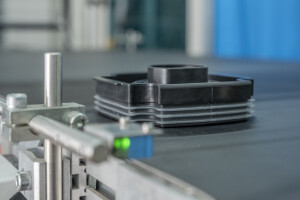
2K injection moulding makes it possible to combine two different materials in a single integrated process step, opening up possibilities that are simply not achievable with conventional injection moulding.
The principle: two materials, one mould
In 2K injection moulding, two materials are injected sequentially into the same mould. The first shot forms the hard core or base structure; the second shot adds the second component, which bonds to or around the first. This can be achieved using a rotary mould, an indexing plate or a transfer system. The result is a component in which both materials are inextricably bonded, without the need for adhesive or assembly. This combines aesthetic freedom with functional precision and mechanical integrity.
When is 2K injection moulding the right choice?
2K injection moulding is particularly valuable when a component combines multiple functions or materials that would otherwise need to be produced separately and then assembled. Hard-soft combinations for ergonomic grips, colour combinations without the need for post-processing, or functional zones with different levels of stiffness are typical applications. 2K also offers an efficient solution when sealing and structure need to be combined in a single component, such as housings with integrated gaskets. The break-even point is reached with a sufficient batch size to recoup the higher tooling investment.
Hard-soft combinations for ergonomic handles and controls
Multi-coloured components requiring no finishing or assembly
Integrated seals in technical enclosures
Functional differentiation within a single component (rigid + flexible)
2K vs. repainting: what are the differences?
Overmoulding is functionally similar to 2K moulding, but differs in terms of process design. In overmoulding, the first component is placed as an insert in a new mould and then overmoulded. This does not require a specialised 2K machine, but it does require two separate operations and a handling step. 2K injection moulding is fully automated in a single machine cycle, enabling higher volumes at lower cycle times. The choice between the two depends on batch size, available machinery and the degree of dimensional accuracy required when positioning the components relative to one another.
Key considerations in product development
A successful 2K component starts with a well-thought-out design. The boundary zone between the two materials – known as the bonding interface – requires particular attention: sufficient contact area, the correct geometry for mechanical anchoring, and compatible material combinations. The thermal shrinkage of both materials must be matched to prevent internal stresses.
De Beer Plastics has over 20 years’ experience in two-component injection moulding and manufactures the moulds for this in-house. Getting involved at an early stage of the design process, preferably through a Design for Manufacturing session, reduces the risk of costly mould modifications later on.

Moulding challenges into Reality
