
PPS injection moulding
PPS injection moulding
PPS (polyphenylene sulphide) is a high-quality engineering thermoplastic that belongs to the group of high-performance plastics.
PPS: dimensionally stable under extreme conditions
PPS is known as one of the most heat-resistant and chemically resistant plastics in its class. With operating temperatures of up to 200–240 °C, and even higher for short periods, and with excellent chemical resistance to acids, alkalis, solvents and fuels, amongst other substances, PPS is often used where standard plastics are unsuitable.
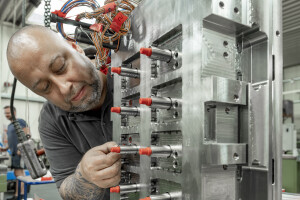
De Beer Plastics has extensive experience in injection moulding PPS into highly complex components. By combining high-quality moulds, advanced injection moulding machines and experienced machine operators, we produce challenging products tailored precisely to your requirements.
The alternative to brass or aluminium
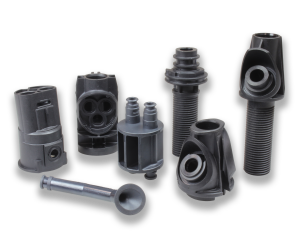
PPS is often used in a glass-fibre-reinforced form for structural components. Thanks to its high mechanical strength and stiffness, PPS-GF40 is a lightweight yet strong alternative to castings made from non-ferrous materials.
Furthermore, it offers superior resistance to corrosion and chemicals, even in harsh environments where brass and aluminium wear out or corrode more quickly. By switching to PPS injection-moulded parts, we can achieve significant weight reduction, lower production costs and more complex designs for you, without the need for post-processing.
PPS: the new standard for drinking water
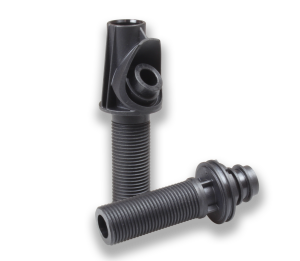
Various types of PPS, including glass-fibre-reinforced variants (e.g. PPS-GF40), are certified for direct contact with drinking water in accordance with strict international standards such as WRAS (UK), KTW-BWGL (Germany) and ACS (France). This makes PPS ideal for components in hot and cold water systems, such as valves, fittings, pump parts, water meters and cartridges.
PPS replaces traditional materials such as brass, without causing corrosion or limescale problems, and offers excellent hydrolysis resistance even at high temperatures. Thanks to its low water absorption and chemical inertness, water quality is guaranteed.
Contact
Would you like to know more about the possibilities of PPS?

CEO
René de Beer
Contact Laurence and find out what De Beer Plastics can do for your organisation.
In-house mould making and R&D for co-creation
Ample capacity across more than 100 machines in three factories
A proven track record in challenging projects

Moulding challenges into Reality
